Depictions, Depictions
11 April - 10 May 2026
Focus Gallery, ara contemporary
What Depictions Tell Us
Adytria Negara has long been replicating objects onto canvas. In one of his earlier series, he imitated wall-mounted objects. In canvas he rendered their depiction with analogous sense of scale and texture.
In painting tradition, this is known as trompe l'oeil, meaning: deception of the eye. In them, static images, lifeless events and depictions are brought to life via painterly simulation, being made to feel just like the materials and actuality of the objects it's mimicking. Thus, they become sensation singularly through deceiving our perception. This can be via spatial illusions, sense of three-dimensionality–or dimensionality itself; can be as though the feeling of being gazed by subjects; as a directed viewing attention towards certain significant objects the painting's space; or even the urge to touch, a sense of freshness, rancidity and many others. At its simplest, it is a gesture for highlighted signification, something symbolic, we being manipulated in perception so that a thing occupies and seizes our senses and imagination: that “this”, or “that”, is what matters.
Adytria's paintings, however, take on a different scene. The allure of symbolic signification is replaced by depictions of simple devices which furnish everyday urban life. Window box fans, light switches, fuse boxes, parcels and its packagings, books from households, wooden planks, and many others which he made looking just as our surrounds, seemingly un-emerging. In their three dimensionality, even the thickness of the canvas matches the original measurements of the devices exactly. Why insist on repeating ordinary objects that, once installed in an exhibition setting, would appear insignificant anyway? In fact, anti-significant. Some of them, even within the confines of the white cube, can be mistaken for the real objects; they can even naturally coexist. What does a painter contemplate about when working with such immaculately transparent objects?
What images narrates to us, now
Half in jest, I came to call this as a shared gesture practice among artists of Adytria's generation, as something in Indonesian we call memulung. Colloquially that would be translated to as scavenging, or foraging, usually among discarded heaps of domestic trash, in urban settings. Some contemporaneous artist friends do have stronger inclination than the previous generation to pick up forgotten objects and breathe new life into them. Each seen as if dwelling in their own interstice in time, in the spaces they share no matter big or small, with life itself.
I recently found the word “pulung” itself, actually carries a more poetic meaning than what us 21st century citizens have been imagining it: “good fortune”. To memulung (as adverb) is to be good-fortune-ing. Thus, reimagined: seeking good fortune, or to be attentive, to be with our hearts towards good fortune. If so does a number of artists do persistently scavenge fragments from everyday life to be part of their artworks–even in years working willing to be remain misunderstood–in there perhaps remain traces of good fortune which escapes our attention. Could the search for beauty itself become a form of good fortune?
If we try, deeply, to sense what good fortune is, we may perhaps hope: the things we feel, the beautiful, becomes the good. And that we are unified with it as a body. Sharing its breath, to be one at least as a body of imagination. Which would then continue to become more good breaths, breaths to be lived as fortune as we are again faced with reality,
To wish for good fortune, then, would probably be akin to praying ad nauseam, willing to something to the point of being nauseous. Like praying, because it demands attention, and nauseous because its dizzying motion turns and swirls to find what is worthy of the attention, to the point of finding the good, that is fittingly integrated, embodied. It is this act of aligning and fitment that is difficult. Thus we might already consider it a blessing when we do not instantly succumb to the nausea, fallen upon us when seeing a contemporaneous artwork seeking for this beautiful-good fortune. An image truly contemporary to us is one which can fit this nausea and brings forth movement over said will. It reaches and moves beyond the nausea.
The velocity of that movement, for an artist is intuitive. Man's intuition towards images is not mere instinct that brings about temporary sense of pleasure or displeasure. Rather, it is attuned to what passes through and endures. Things which resonate in our minds. What perhaps, will only feel more as pleasure later. It is a complex yet smooth feeling. Experienced as something real, yet transcends it and carries us forth towards what cannot be contained by any previous realities we have observed. Has Adytria performed this gesture?
Depictions once said
In the 1970s, the way of perceiving images, as Jim Supangkat wrote, had changed, as life in cities in Java also shifted. The increasingly urbanised and cosmopolitan experience with media flourishing, novel to the 1970s, had brought with it a volume of texts, images, and imaginations ready to be consumed by increasing amounts of people. This gave rise to a new world to be depicted. Realistic images, images with intent and purpose, ones in seek of pure beauty and disinterested, quotidian, historical images, tasteful images and tacky ones, all being present, produced, consumed, depicted and re-depicted, reimagined at the same time in a new sped-up rhythm.
A new style of realistic painting was, in Supangkat's observation, born at this time. Writing from the 1990s, he dubbed it “painstaking realism”, as a movement driven by a will to laboriously depict a world of new sensations as accurately and as contemporaneously as possible. In them, the increasingly complex reality and its times and spatial volumes enter into assemblage; with dreams, imaginations becoming buildings, built upon in an increasingly unexpected manner as well. Supangkat's realistic paintings of the 1970s would also include trompe l'oeil as part of its guidebook.
Thus painting to deceive eyes becomes a way to transcend them, almost to the point of visualising the invisible, beyond the ubiquitous, beyond things taken for granted which only passes. A gesture to catch up with the times. A willingness to enframe, to be in nausea to find a way to capture the splendour of new realities. For Supangkat, this was interpreted as the ability to be truly contemporary, and there contemporary art was born.
Depictions, embodied
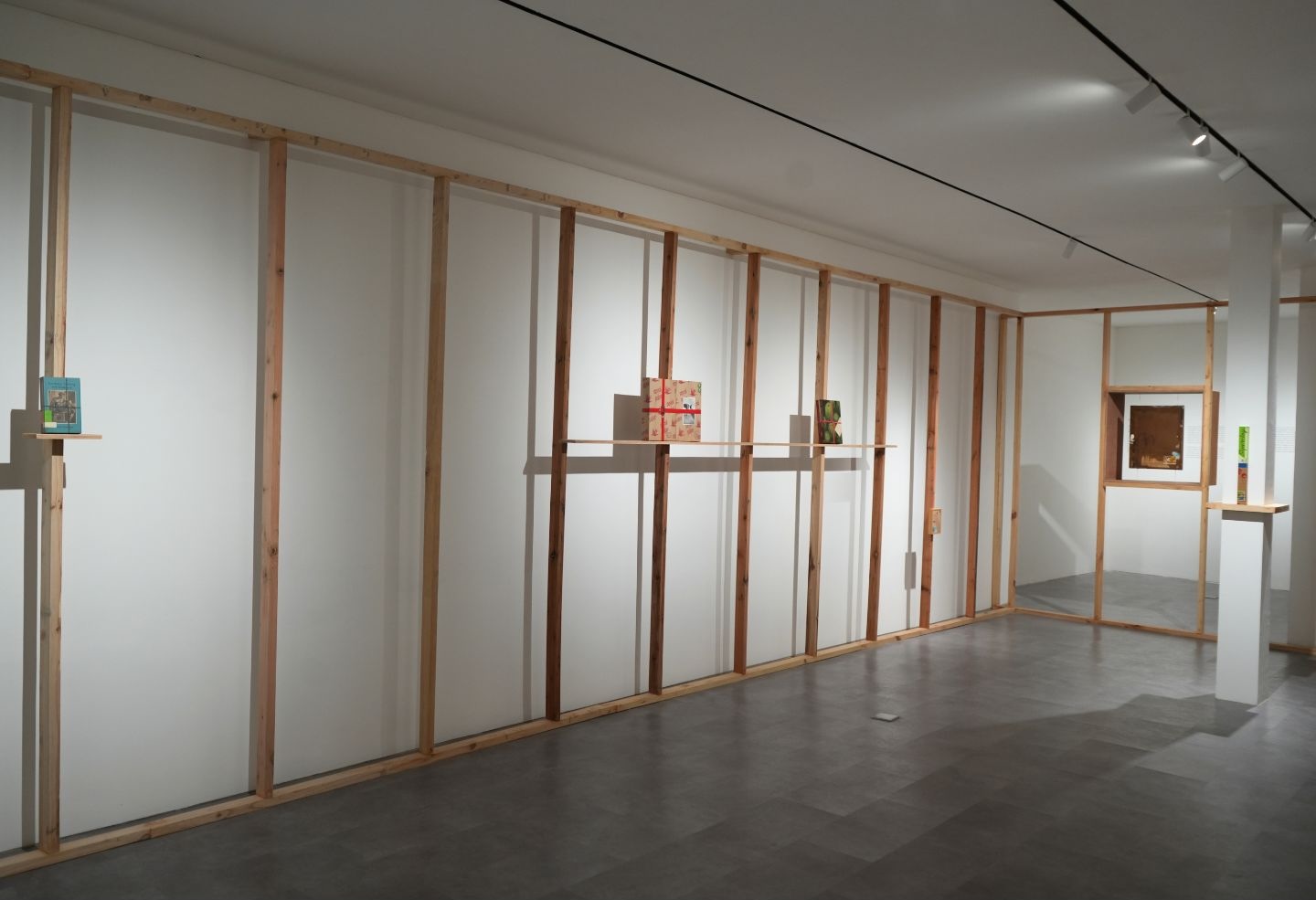
In this exhibition, Adytria comes with a body of new works. Being of smaller-sized images, they are installed amidst lean wooden beams, which themselves fill the space like structure, framing it. It feels as though we are facing the skeleton of a room, its scaffolds, as if observing it through x-ray, entering the bones of this chamber. One layer of dimension is peeled back; the wooden scaffolding itself appears in its pure materiality. In similar gesture, Adytria's paintings also leaves behind certain layers of reality, as well as putting the purity of something into focus. If wood can manifest itself as pure in the rawness of its textures, how can a painting act out its immaculateness? This exists in the pure gaze which we can only get through experiencing paintings.
Paintings make us dissolve. A quote which often comes to my mind is that “a painting is to be drunk,” from Jacques Lacan. We drink, or we become drunk and swept away out of consciousness when we truly experience paintings. Its fluidity can go into two directions: the fluidity of the paint itself, sliding against the face of the canvas, sometimes amassing a thickness of some sort, as though a fluid seeking its fate and fortune. Or, the fluidity of our experience, being dissolved and carried into particular scenes, specific imaginations brought about by the illusion of depth, space, and the dynamics of the dimensions that the painted surface creates. If we imagine ourselves drinking, those scenes are truly gulped, becoming parts of our body, being so vividly imagined that they fill the body's cavities in their nature, capable of becoming vessel for fluid.
The “Imitation” in Adytria's paintings becomes crucial to that nature of our response when facing paintings, as they fluidly dissolve from one layer to another. On each canvas, there are combinations of images, a collage, or even assemblage. A voluminous book tied with a thin single string thread, both objects being renderings of paint on canvas. They don't materially exist as “real” book or thread, but as a reimagined depiction, almost indistinguishable from the real. Behind the closest likeness there lies a deliberate choice in how to bring it to life. To mimic, to reduce the dimensions and details of an object to their smallest, to recreate, is an intense form of contemplation and nauseous mental labour. The thick mass ad nauseam. As there are many aspects too contingent to endure. Much to be brought into judgment, much to be brought to life.
There, fluidity becomes an achievement in itself. Within such complexity, Adytria's paintings assume the flesh of the image that is thicker than that of usual canvases and paintings. They are not mere flat painted plane-surfaces for a particular view to be observed. Rather, we perceive them as already dissolved and merged volumes. Each canvas is a body of a window of vision, capturing what an object is and its vision, which carries us into different spaces and times. They are conjoined and one with each other.
The imitative in his paintings, then, is a deliberate intensity: presenting what endures, what sediments when things are reduced to its essence. It is as if an actual plane is cut from a particular space-time, appropriated from there, to be brought into one's possession by being of worthy value–di-pulung, scavenged for good fortune. Good fortune means that one has encountered the good in the course of time. Paintings dissolve us into that: towards good depiction as something meant to be eternal. Or, at the very least, something to be continually referred to, remembered.
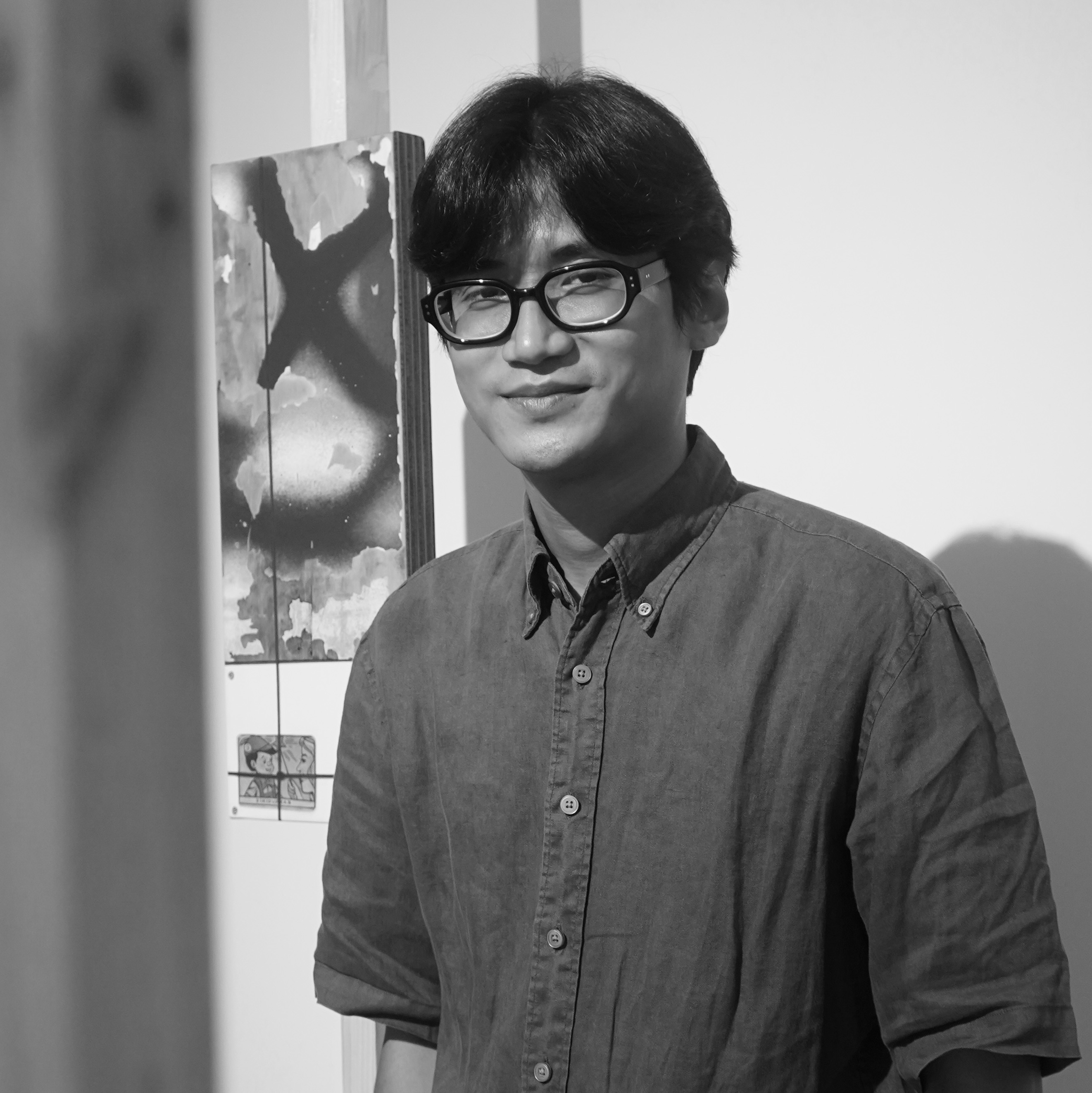
Yacobus Ari R.
Artists
Exhibition View



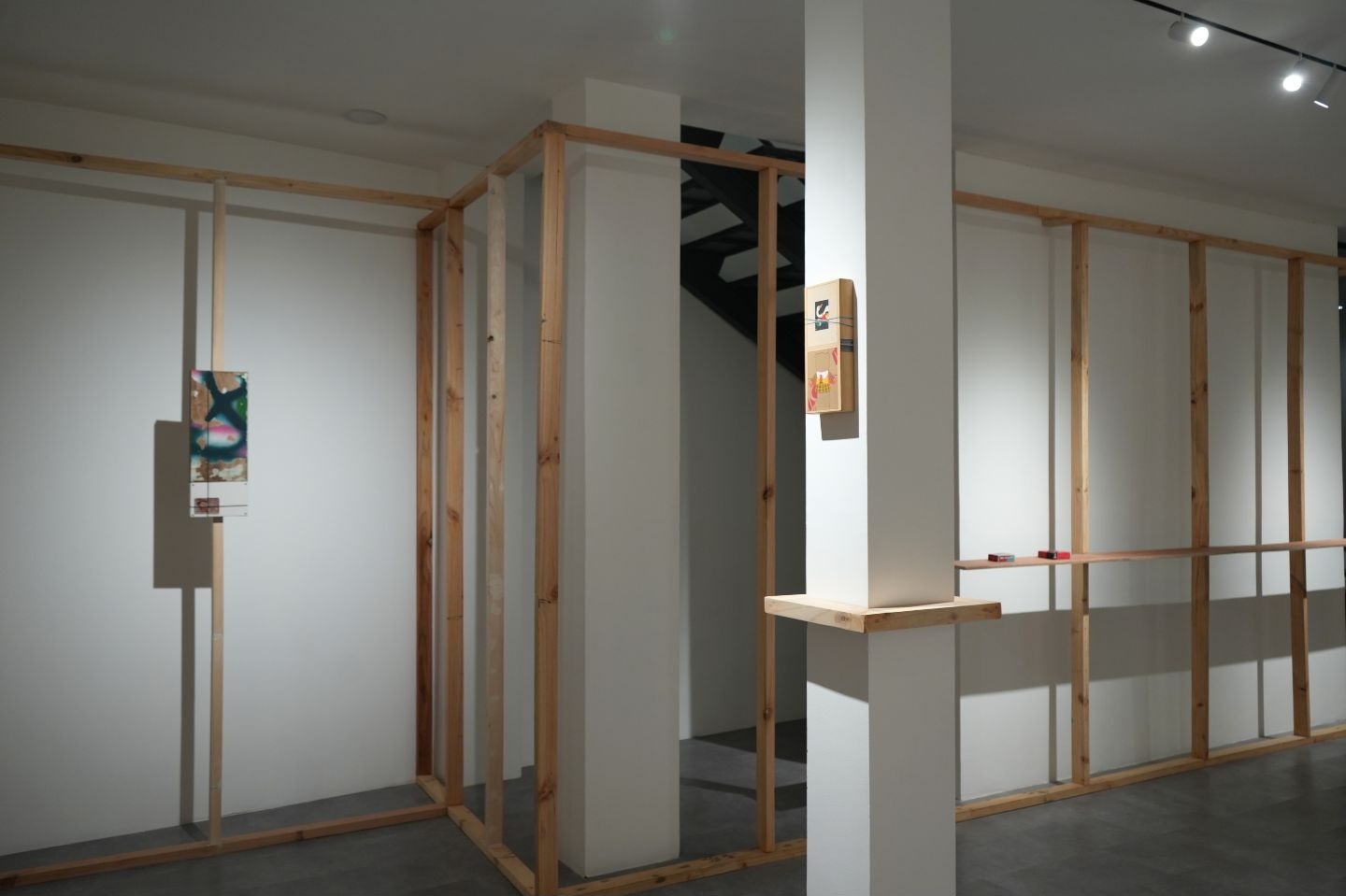


Artworks

Adytria Negara
Depictions, Depictions: European Painting & Sculpture, A Dictionary of Psychology, Spine Label, Prusik Cord
2026, oil on canvas, 18 x 11 x 3,5 cm

Adytria Negara
Depictions, Depictions: Flowering House Plants, Picture Card Sheet, Elastic Cord
2026, oil on canvas, 28 x 22 x 3 cm

Adytria Negara
Depictions, Depictions: Plywood, Spray Paint, Picture Card Sheet, Elastic Cord, Screw
2026, oil on canvas, 55 x 20 x 4 cm

Adytria Negara
Depictions, Depictions: Stensil Paper, Photograph, Pin Button, Plastic Buckle, Nylon Webbing
2026, oil on canvas, 33 x 43 x 5 cm

Adytria Negara
Depictions, Depictions: Superclay, Laser-Cut Acrylic Sheets, Picture Card Sheet, Masking Tape, Prusik Cord
2026, oil in canvas, 44,5 x 4,5 x 4 cm
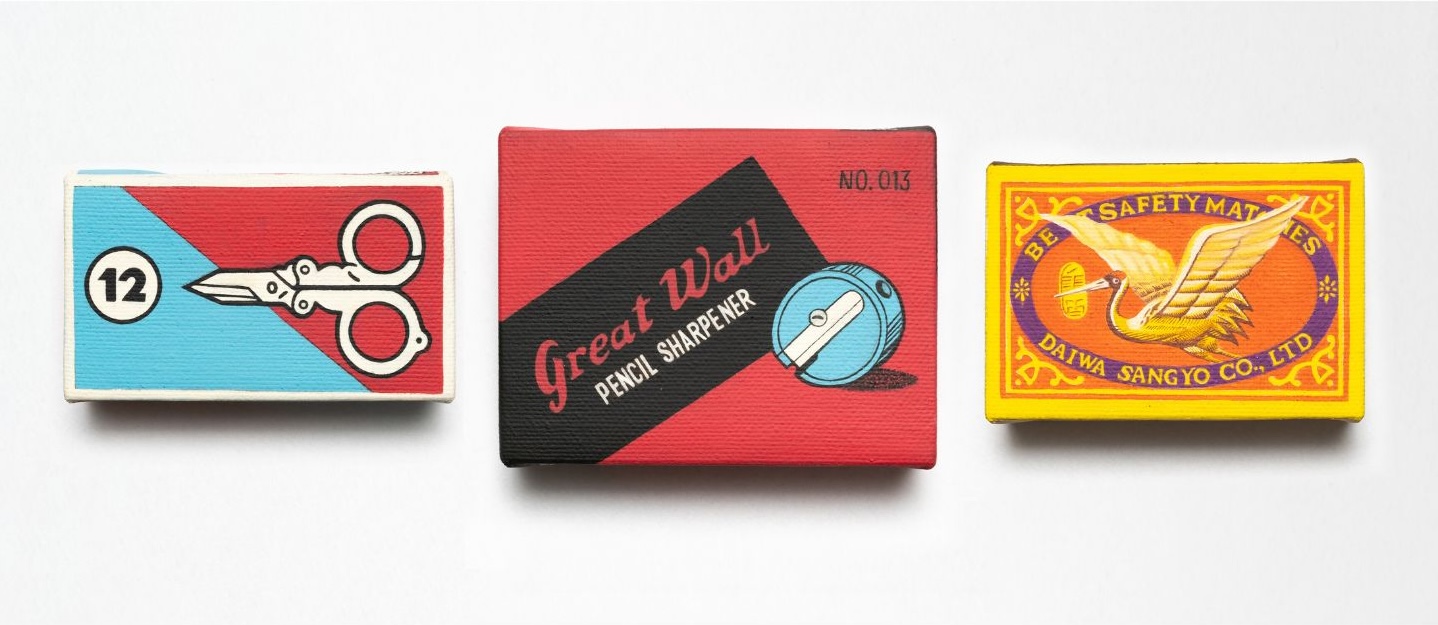
Adytria Negara
Depictions, Depictions: Trip Scissors, Pencil Sharpener & Safety Matches
2026, oil on canvas, 5,5 x 9,5 x 2,5 cm, 8 x 10,5 x 2,5 cm, & 6 x 9 x 2 cm

Adytria Negara
Depictions, Depictions: Wooden Tray, Wood Filler, Sticker, Picture Card Sheet
2026, oil on canvas, 51 x 40 x 4 cm
Media Links
